Dentistry redesigned the treatment environment around the practitioner, bringing the patient into a better working position instead of asking the dentist to keep adapting their body.
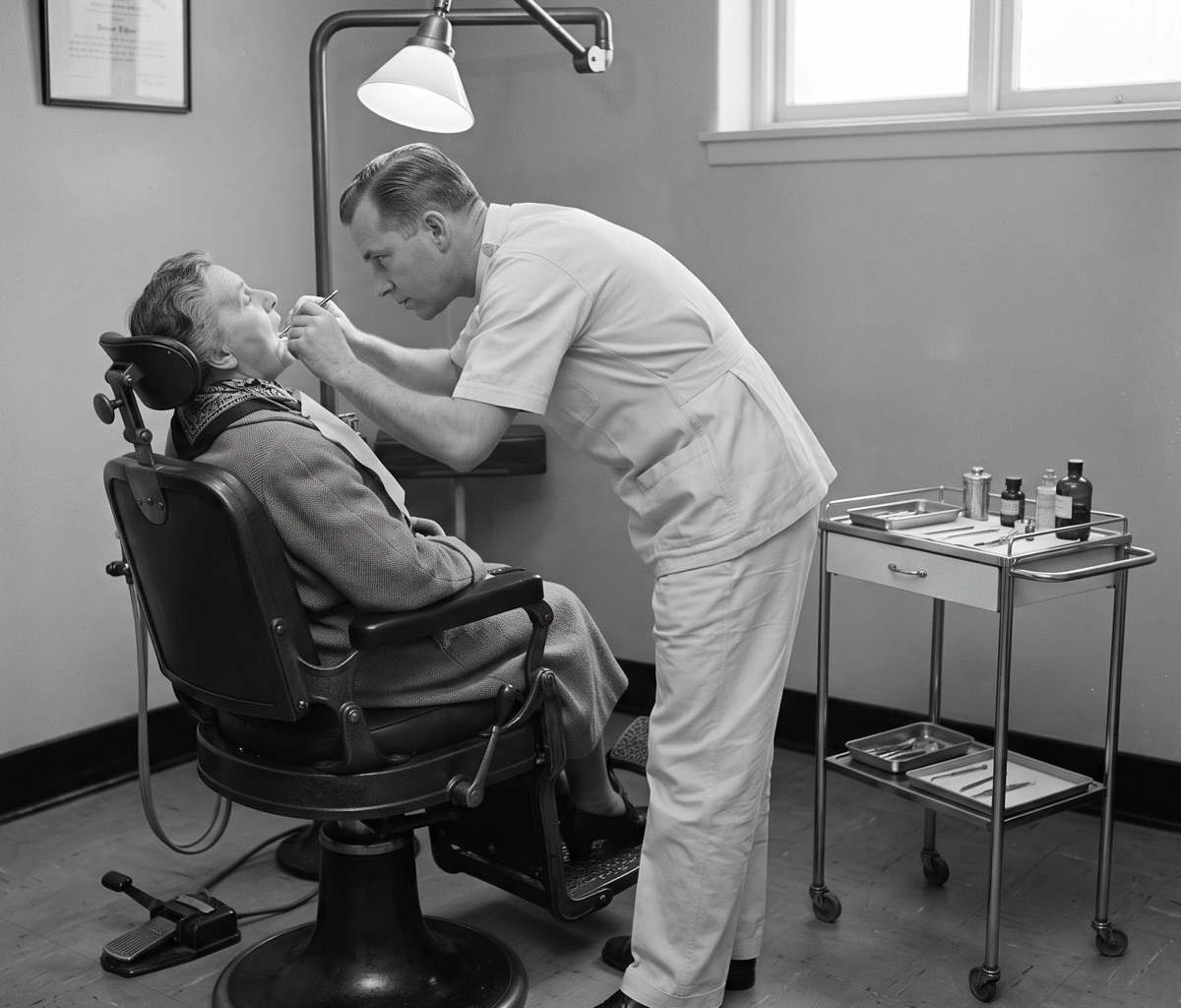
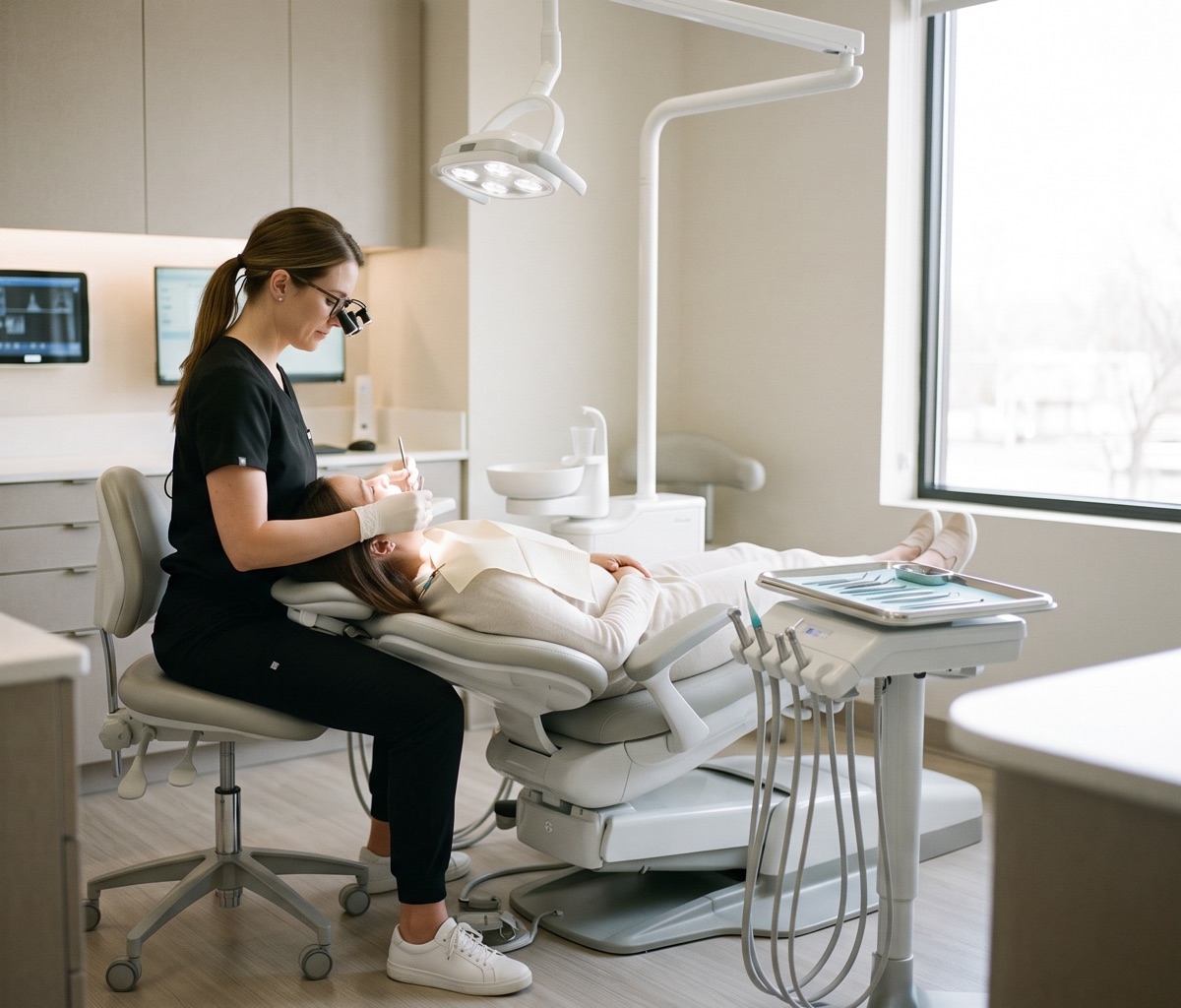
Before 1958: the dentist stands, bent forward over the patient.
Dentistry today: the dentist sits, with the legs under the patient.
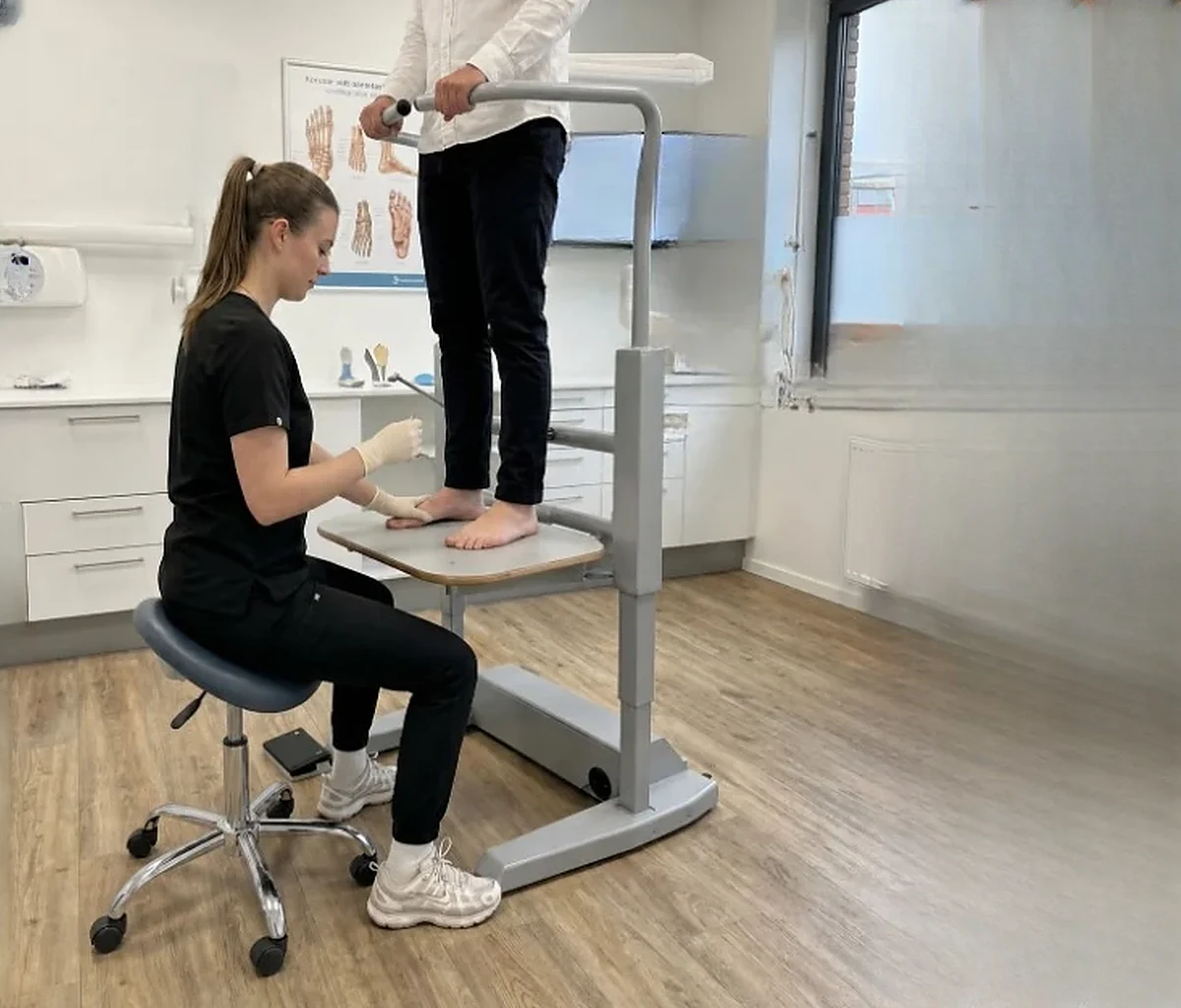
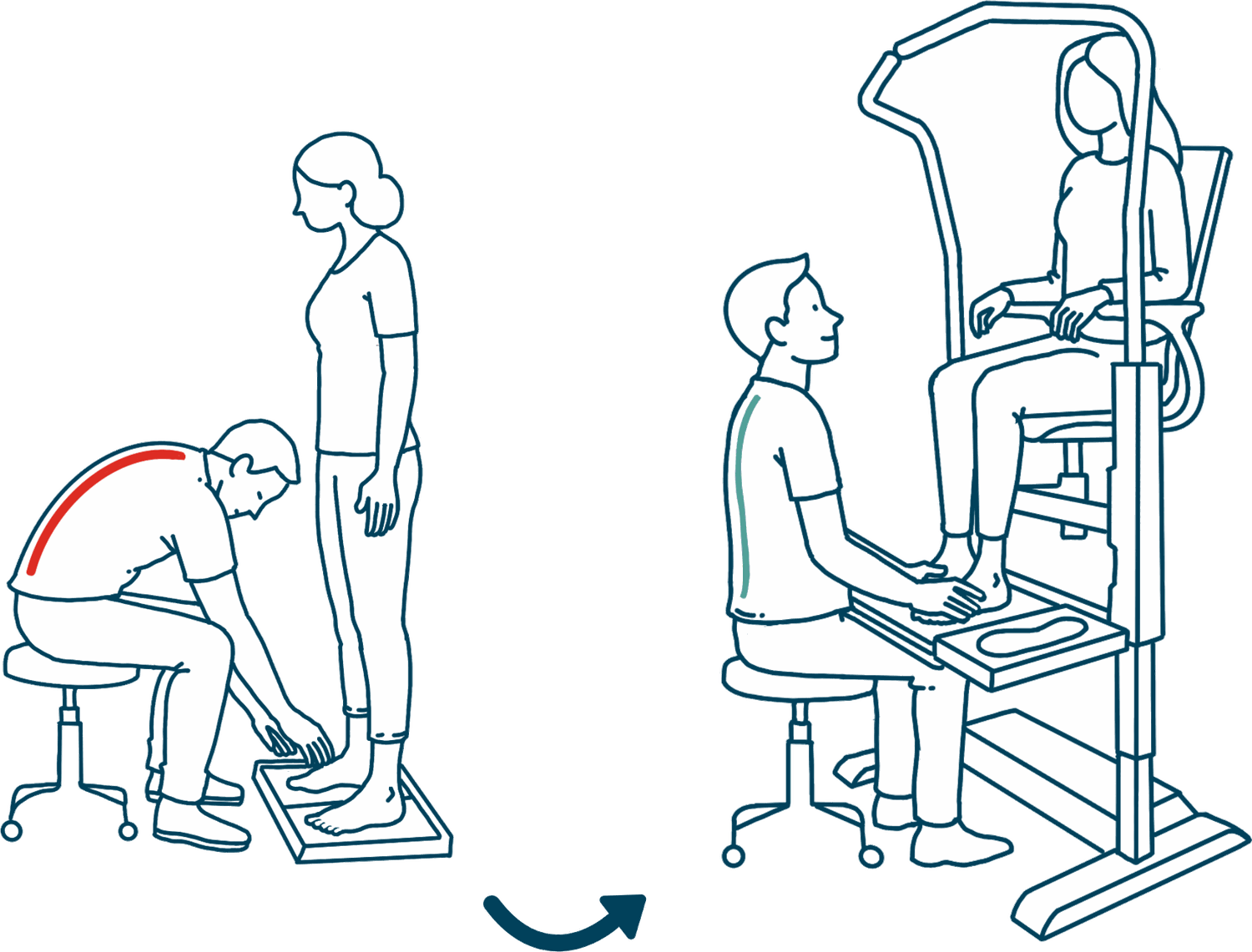
The client stands on the lift. You sit, with your legs under the work.
Dentistry moved the patient.
Foot care still moves the practitioner.
In 1958 a dental chair was shaped so that the seated dentist's legs fit underneath the patient. Within a generation the whole profession sat down. The Orthostand is built on exactly the same idea.
The chair leaves no room for a seated dentist's legs. So the dentist stands beside it all day, bent forward and twisted to one side, over a patient who cannot be moved.
In Iowa, inventor John Naughton starts selling a contour chair with a break in the backrest. The patient lies back and the mouth comes to rest above the dentist's lap. The dentist sits on a stool and slides the legs under the patient. By the late 1970s this is the standard worldwide.
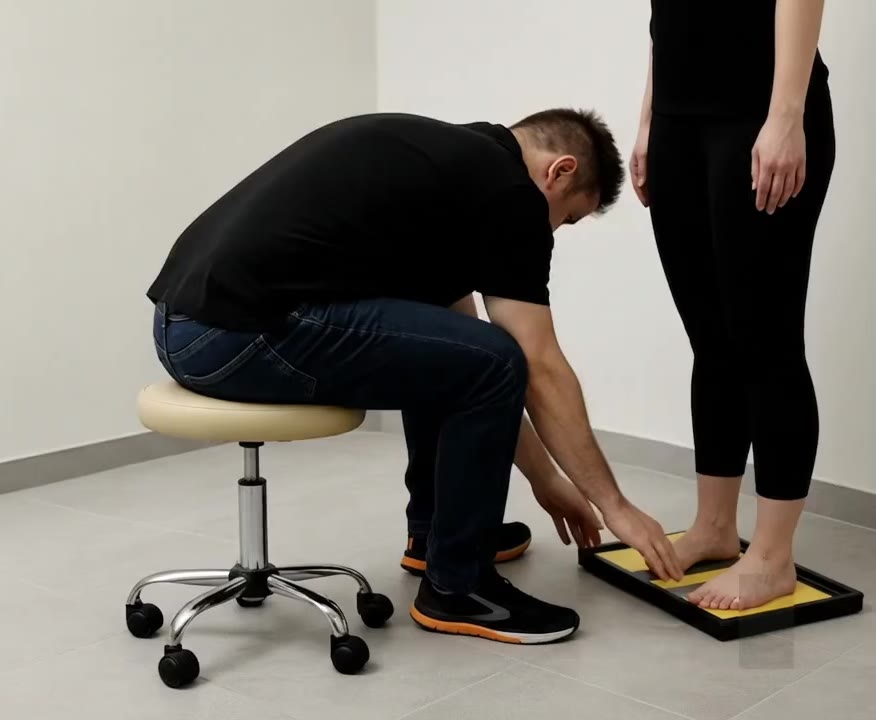
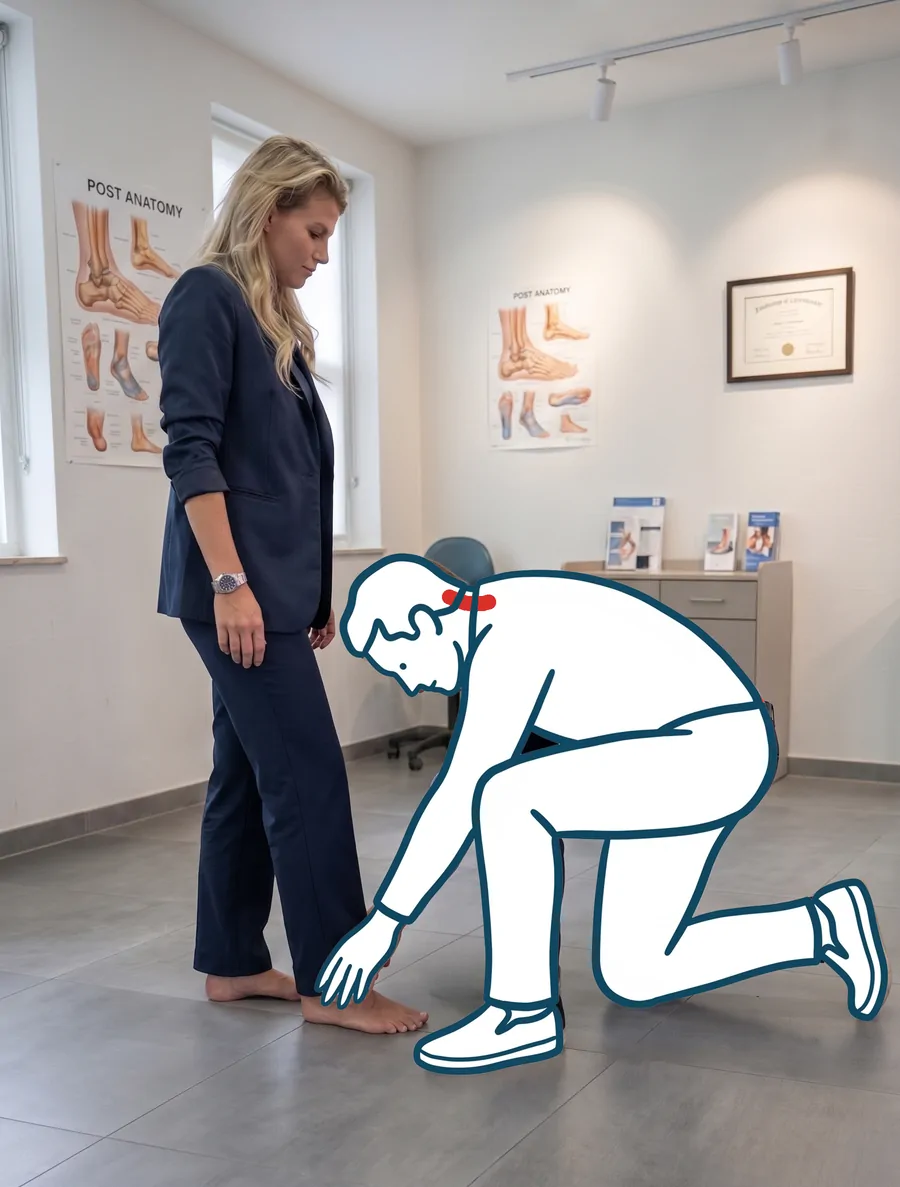
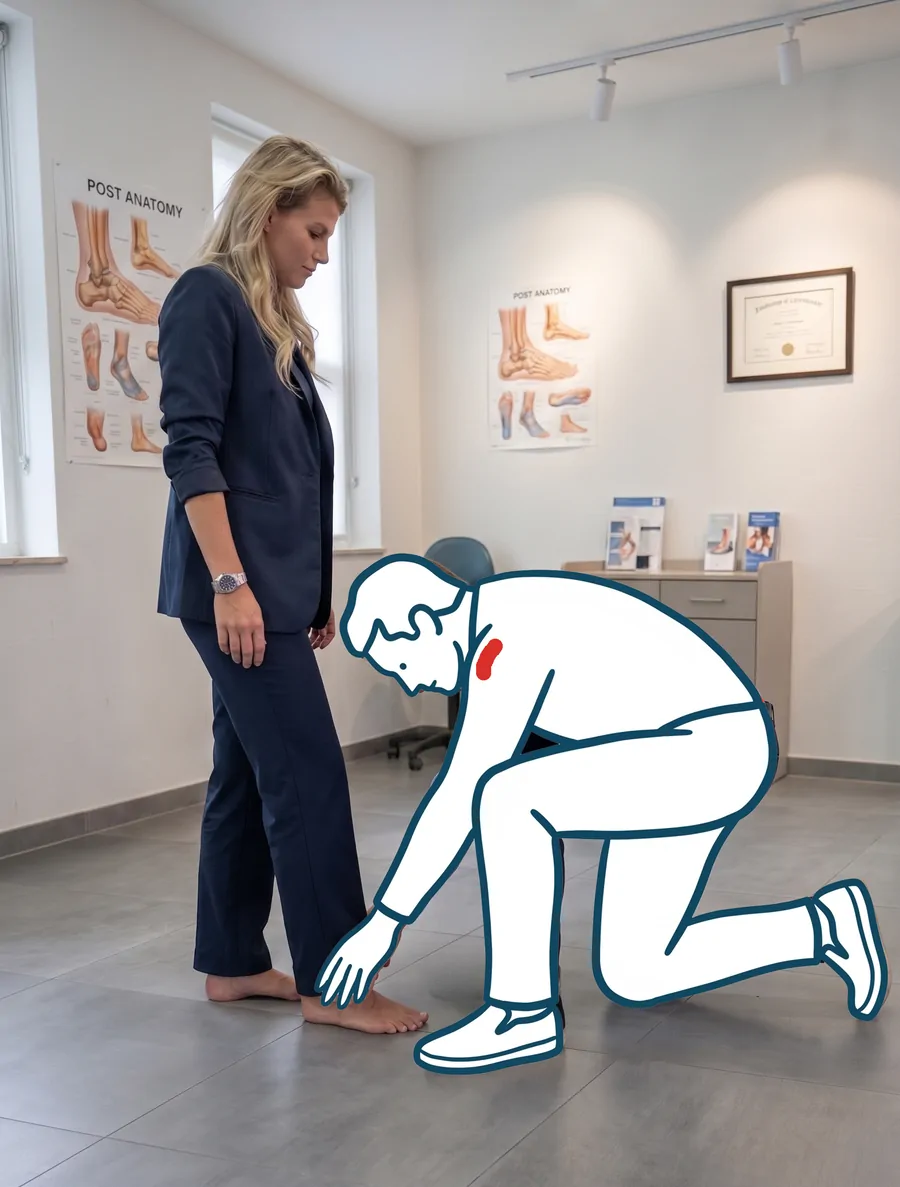
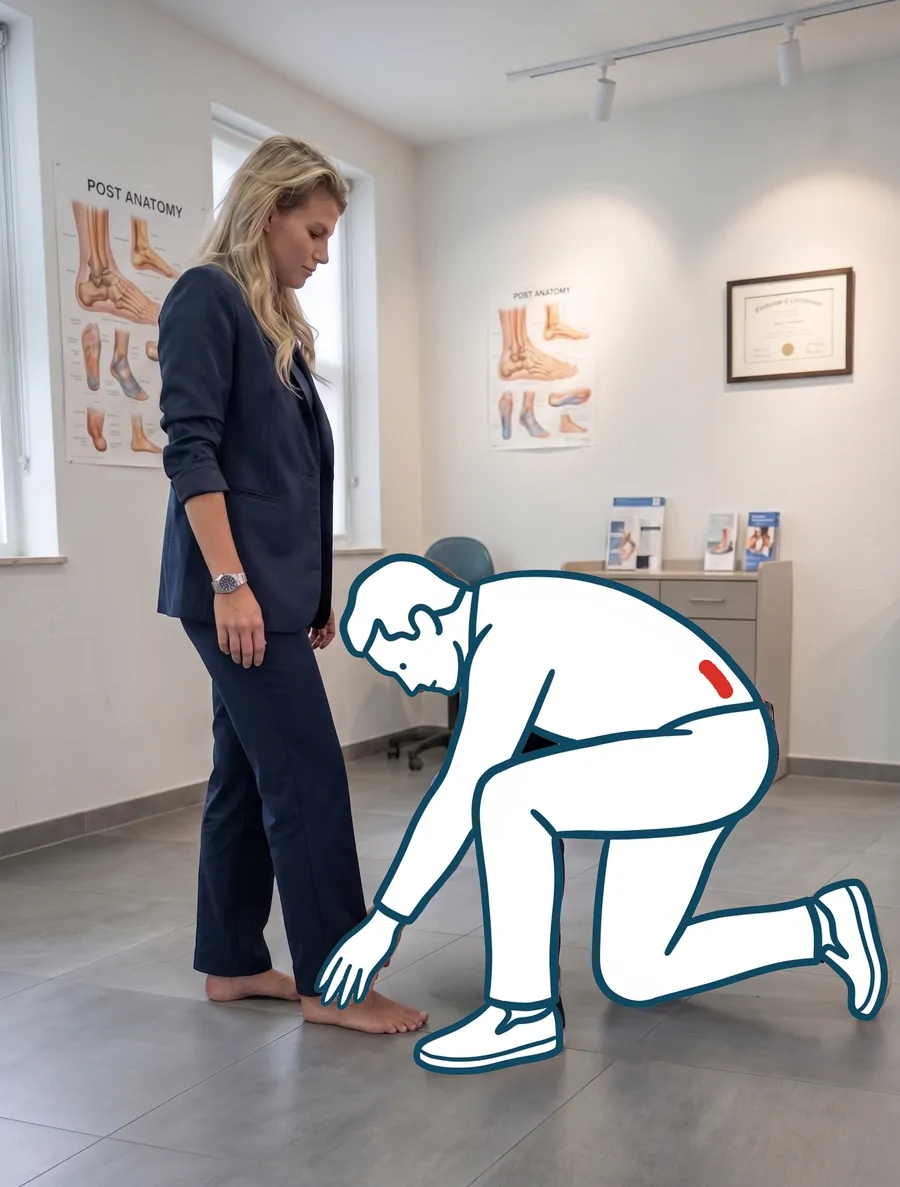
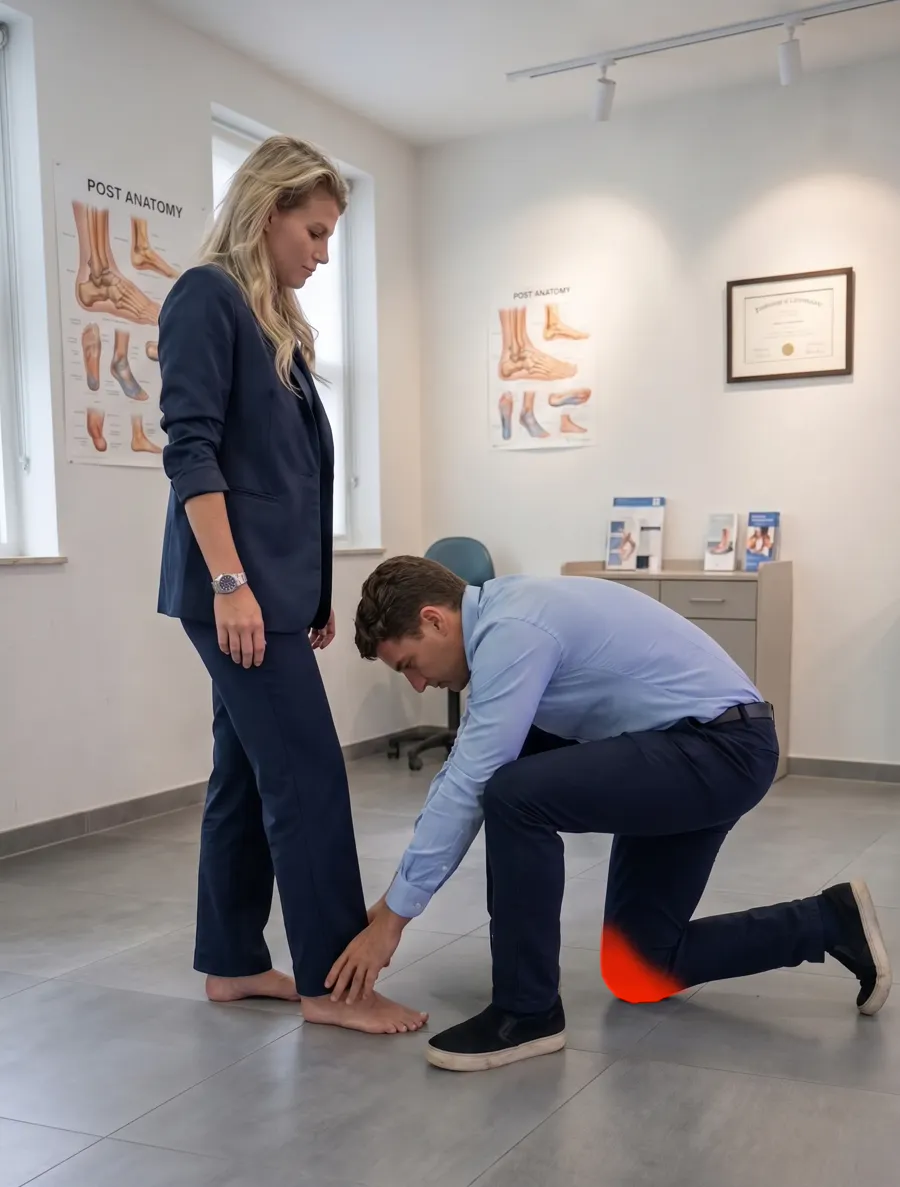
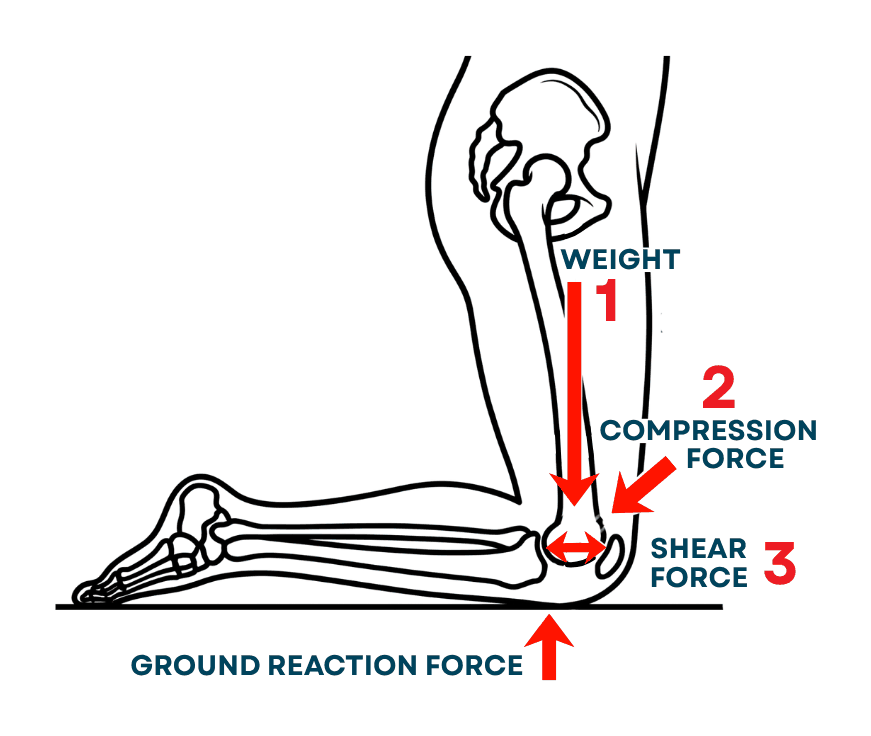
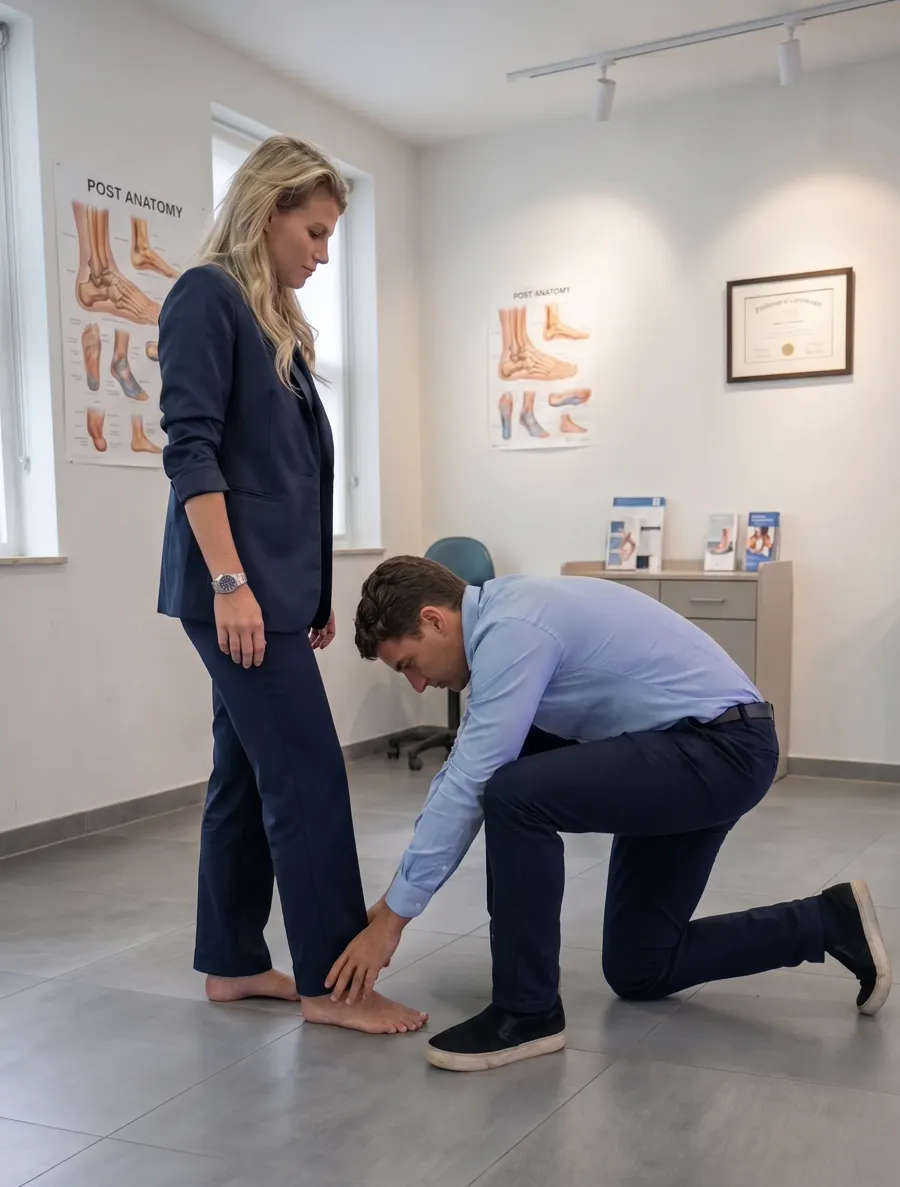
Treatment chairs raise the foot, but only unloaded, with the client sitting or lying. To measure or treat the loaded foot, the client stands on the floor. You kneel on one or both knees, bent forward, or improvise your own floor acrobatics. Half the treatment still happens at floor level.
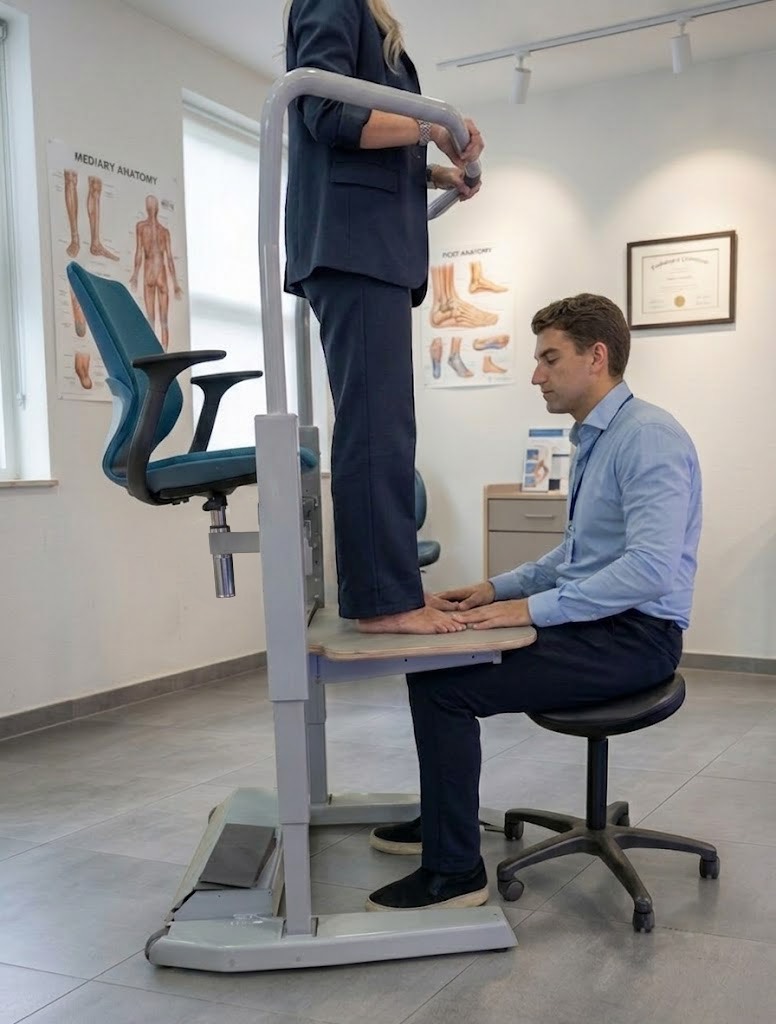
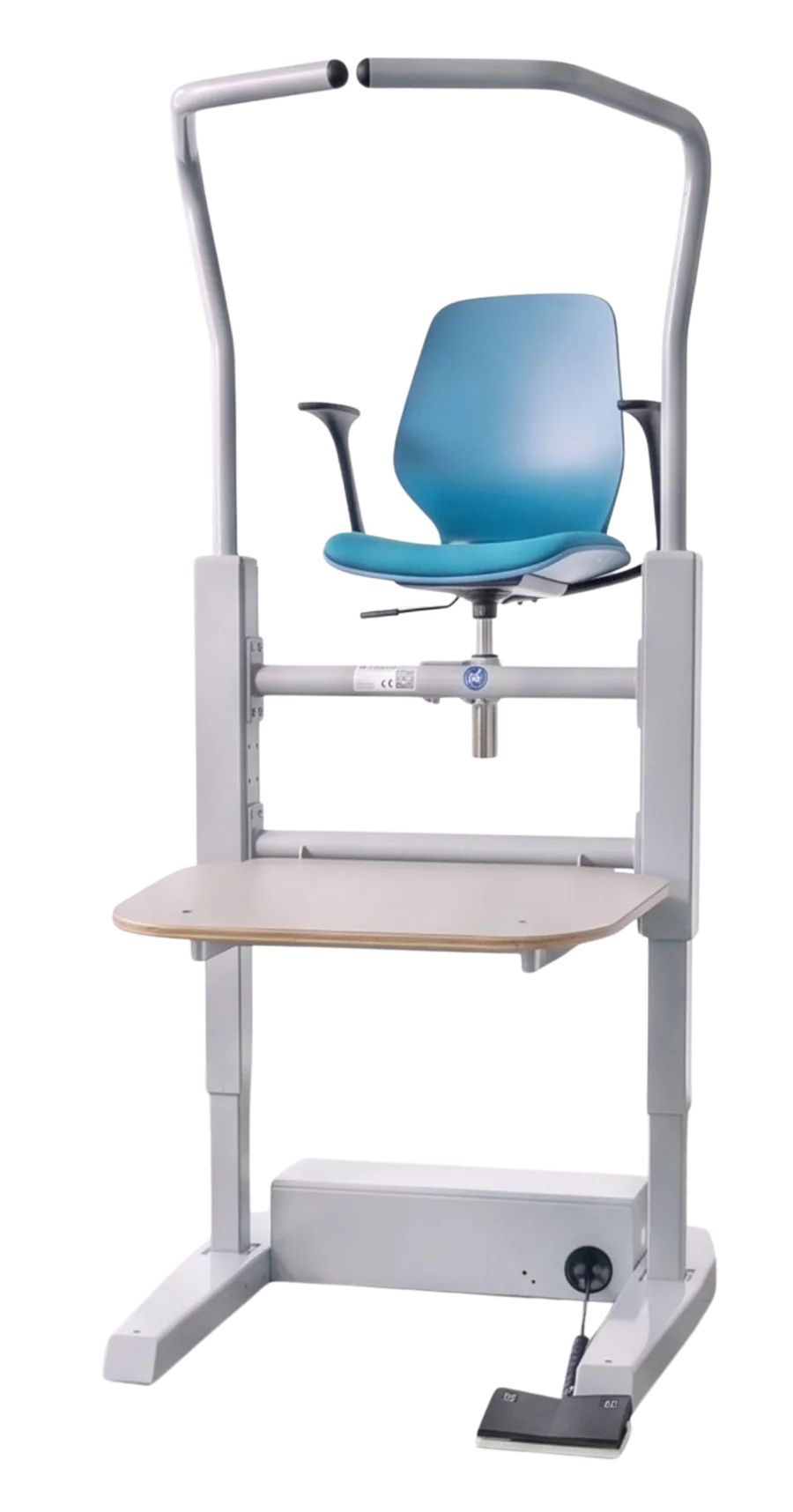
The Orthostand was developed on the dentist's principle. The motorised lift raises the standing client, safely and steadily. You stay seated on your stool with your legs fully under the work, just like working at a desk. And if the client needs to sit, that happens on the same lift.
Sources: Pacific Dental Museum, DrBicuspid, UAB School of Dentistry.
You stretch your back between clients without thinking about it. You kneel without deciding to kneel, because it is just how you reach the foot. And somewhere along the way you told yourself it comes with the job.
Almost every specialist recognises this. Almost none of them call it a problem.
In foot care, a significant part of every day is spent forward-bent and still, low to the ground. The effort isn't the problem, the stillness is. Here's what it does, and why it's worth changing.
Holding the same working posture keeps the same muscles active for extended periods, with fewer opportunities to relax and recover.
of reported injuries occurred within the first five years of practice.
Williams et al., Journal of Foot and Ankle Research, 2017.
Traditional foot and lower-limb care asks the practitioner to move down to the work. But the relationship can be reversed.
The Orthostand M30 raises the client, seated or standing, to the height where you work best.